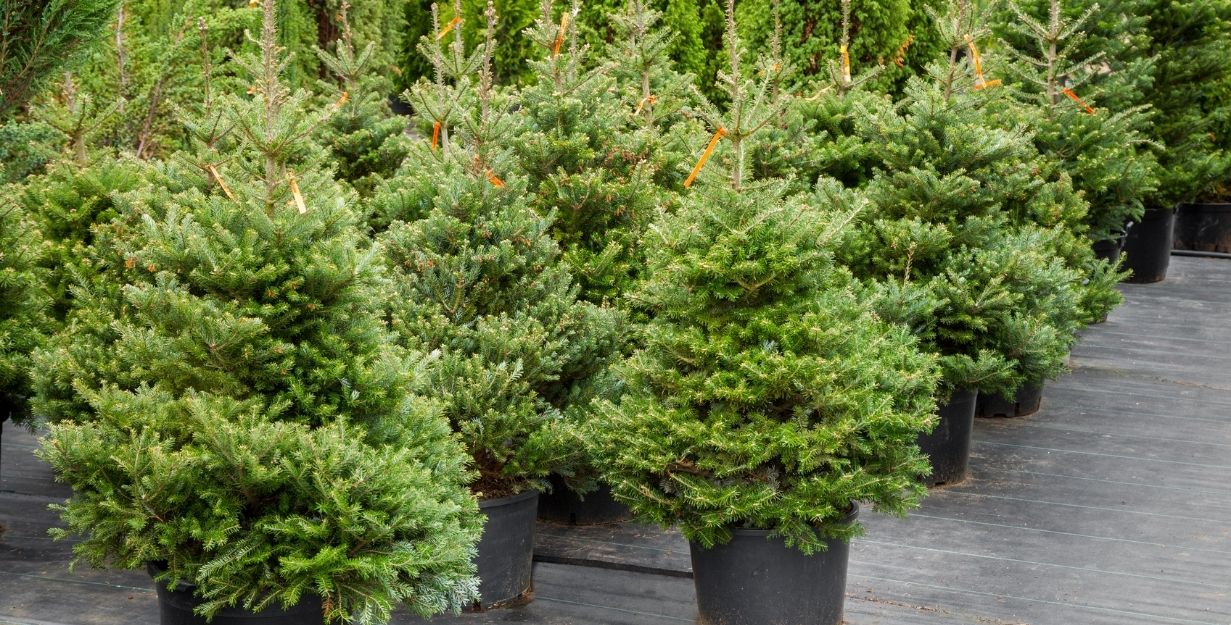
For many people, taking down the Christmas tree after Three Kings’ Day marks the end of the festive season. However, those who chose a potted Christmas tree are actually at the beginning of a journey – with the opportunity to preserve the plant and plant it in the garden in spring. To ensure that the tree successfully establishes itself and continues to grow, it is important to follow a few essential care guidelines.
Why does a potted Christmas tree require special care?
During the holiday period, a potted Christmas tree experiences considerable stress: warm indoor temperatures, dry air, and limited root space in the pot. A sudden transition from a warm room to outdoor conditions is one of the most common reasons why such trees fail to survive. Therefore, the main goal is to ensure the gentlest possible transition into dormancy before spring planting.
How and where should the tree be kept until spring?
Once the decorations are removed, the tree should not be taken straight outdoors if outdoor temperatures are below freezing. The correct approach is gradual acclimatisation:
- Location. A cool, bright space is best: an unheated hallway, a garage with a window, a cellar, or a veranda. The optimal temperature is 0–5 °C.
- Watering. The soil in the pot should be slightly moist, but not wet. Water sparingly, only when the top layer of soil begins to dry.
- Light. Direct sunlight is not necessary, but complete darkness should also be avoided.
- Fertilisation. No fertilisers should be used during winter – the tree must remain in a dormant state.
When can the tree be planted outdoors?
A potted Christmas tree should be planted in early spring, when:
- the soil has thawed,
- the risk of severe frost has passed,
- daytime temperatures consistently remain above +5 °C.
Under Lithuanian conditions, this usually occurs from late March to April, depending on the weather.
How to plant the tree correctly?
Planting is a critical stage that determines whether the tree will establish successfully.
- Planting hole. It should be at least twice as wide as the diameter of the pot.
- Roots. The tree should be planted at the same depth as it grew in the pot – the root collar must not be buried.
- Moisture. After planting, the tree should be watered thoroughly.
At this stage, it is especially important to take care of the root zone and reduce transplant stress.
How to help the tree establish more easily?
During transplanting, the tree experiences natural stress, so it is beneficial to use solutions that support root activity and moisture balance:
HUMISAP TAB PINE – tablets specially designed for conifers, placed in the planting hole near the roots. They:
- retain moisture in the root zone,
- promote faster root establishment,
- provide long-lasting action and help the plant adapt to its new location.
HUMIROOT (root activator) – used for watering after planting. It:
- stimulates the formation of fine roots,
- improves nutrient uptake,
- reduces stress experienced during transplanting.
PLANT STIM – support for plants after stress. It:
- helps the tree recover more quickly,
- maintains plant energy and vitality,
- is suitable for both root application and foliar spraying.
This combination is particularly suitable for spring planting, when a smooth transition from pot to permanent growing location is desired.
Practical tip
If spring is dry, monitor the tree especially closely during the first 4–6 weeks after planting – water regularly and prevent the soil from drying out. The roots of young trees transplanted from pots are not yet deeply established, so maintaining proper moisture balance during this period is crucial.
With proper care, a potted Christmas tree can successfully establish itself in the garden and become a lasting green reminder of the past holidays. 🌲